Day-of-flight checklist for flying with a dog: from breakfast to baggage claim
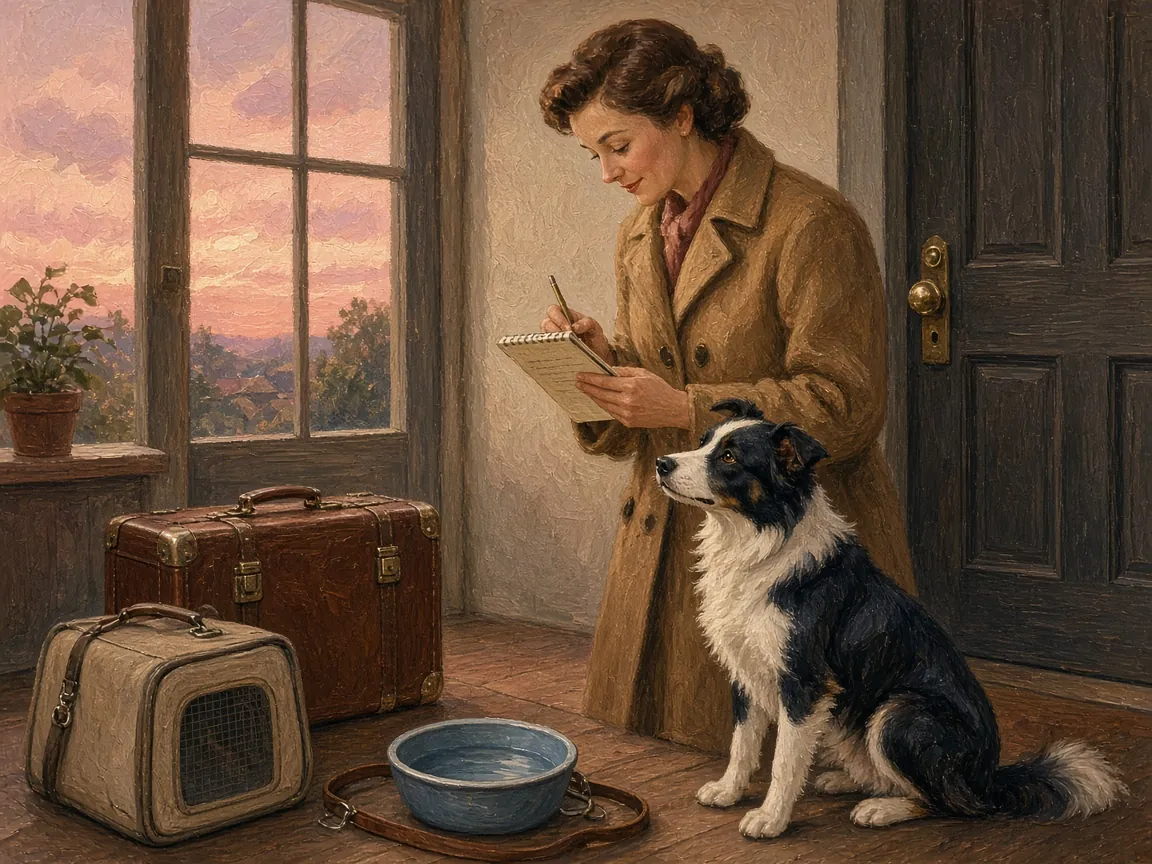
You've booked the pet space, bought the right carrier and done the paperwork. Now it's travel day. This checklist follows your dog from breakfast to baggage claim. Every step is backed by the American Veterinary Medical Association (AVMA), IATA, a government agency or the airline's own instructions.
Confirm with your airline and your vet. Airline and government rules change often. This checklist summarizes official and veterinary sources checked on 24 November 2026. It is not veterinary or legal advice. Before you fly, confirm the current rules with your airline and talk to your veterinarian about your dog's health.
The day before
- ☐ Reconfirm your flight. The AVMA recommends reconfirming your flight the day before to catch unexpected changes (AVMA brochure). Check that the pet reservation is still attached to your booking.
- ☐ Check the weather on your route if your dog travels in the hold. American won't accept a pet if the current or forecast temperature is above 85°F (29.4°C) anywhere on the itinerary (American).
- ☐ Check document timing. Some documents expire fast. Mexico's screwworm certificate for dogs from the US must be issued no more than 5 days before arrival, and Delta says it will verify it at check-in (Delta; APHIS).
- ☐ Service dogs: if you booked more than 48 hours ahead, your airline may have asked for the DOT forms up to 48 hours before departure (eCFR 14 CFR 382.75). See the DOT forms guide.
- ☐ Pack the dog's bag. The AVMA suggests proof of vaccination and medical records, a recent photo, a leash, food, water and all medications (AVMA brochure).
Documents folder
| Document | When you need it | Source |
|---|---|---|
| Airline pet reservation / receipt | Every flight | Your airline |
| Rabies certificate and medical records | Every trip; required to enter Canada for dogs 3 months and older | AVMA brochure; CFIA |
| CDC Dog Import Form receipt | Entering or returning to the US | CDC |
| Screwworm inspection certificate | US → Mexico (≤ 5 days); Mexico → US (≤ 5 days) | APHIS – to Mexico; APHIS – to US |
| DOT Service Animal forms | Service dogs, if the airline asks | eCFR 14 CFR 382.75 |
| Responsibility letter (carta responsiva) | Snub-nosed dogs on Mexican airlines | RLAC Art. 107, DOF |
| Recent photo of your dog | In case you are separated | AVMA brochure |
Porter checks the CDC Dog Import Form receipt before you board a flight to the US (Porter). Keep paper copies. CFIA, for example, recommends carrying physical originals because inspectors may ask for them (CFIA).
Morning of the flight
- ☐ Feeding. Ask your vet; the AVMA says to discuss whether and when to feed your pet before, during and after the flight (AVMA brochure). Airline guidance varies:
- WestJet: "Your pet must be fed and watered within the four (4) hour period before check-in. Only feed your pet a light meal prior to departure" (WestJet).
- PAL Airlines: feed four to six hours before departure, "as a full stomach may cause discomfort" (PAL).
- Volaris: give food and water four hours before the flight (Volaris).
- ☐ Medication only as prescribed. The AVMA says to consult your vet before giving any tranquilizers or sedatives. They "can increase the risk of heart or respiratory problems and generally are not allowed by airlines" (AVMA brochure). Read talk to your vet before a long flight.
- ☐ Exercise. Walk your dog before entering the airport (AVMA brochure). PAL also asks you to exercise your pet before coming to the airport (PAL).
- ☐ Carrier ready. Put in an absorbent pad and a familiar item; the AVMA says a familiar toy or blanket can help your pet feel more comfortable (AVMA). Flying into Mexico from the US? Arrive with a clean carrier. SENASICA removes and destroys loose bedding, toys and food, and allows only that day's food (APHIS).
At the airport
- ☐ Check-in time. Allegiant requires passengers with pets to check in with an agent at the ticket or gate counter at least one hour before departure (Allegiant). Volaris asks you to be at the counter at least two hours before domestic and three hours before international flights (Volaris). For cabin pets, the AVMA suggests checking in as late as possible to reduce time in the busy terminal (AVMA brochure). For pets in the hold, IATA suggests checking in early so the animal can be taken to the baggage area and kept somewhere quiet and dimly lit (IATA).
- ☐ Weigh-in. Some airlines weigh the pet and carrier. American says it will weigh them at check-in (American). Know your airline's limit; see the carrier size guide.
- ☐ Hold kennels. Air Canada secures hold kennels with resealable zip ties, provided at check-in (Air Canada).
- ☐ Security screening. Take your dog out of the carrier just before screening, before the carrier goes through the X-ray tunnel. Afterwards, move to a quiet area away from the belt and put your dog straight back in (AVMA brochure). Keep the leash on.
- ☐ Relief break. Service dog handlers can ask airport or airline staff for the nearest service animal relief area (US DOT).
Boarding and in flight
- ☐ Tell the flight attendant that your pet is on board (AVMA brochure).
- ☐ Carrier stays under the seat in front. Service dogs ride on your lap or in your foot space, provided they don't block the aisle, an exit or another passenger's space (eCFR 14 CFR 382.77; US DOT).
- ☐ Keep the dog in the carrier. PAL says the carrier must go with you to the washroom if needed (PAL). Under Canada's CTA decision, taking an emotional support dog out of its carrier can be grounds for refusal (CTA).
Arrival
- ☐ Pets in the hold: pick them up promptly at your destination (AVMA brochure).
- ☐ Border inspection:
- In Mexico, go to the OISA office for the SENASICA inspection (APHIS).
- In Canada, CBSA inspects the documents. Arriving from outside the US, expect the CFIA inspection fee of CAD 36.95 for the first dog (CBSA).
- In the US, have the CDC receipt and, coming from Mexico, the screwworm certificate ready (CBP).
- ☐ Water and a walk as soon as you're outside the terminal.
- ☐ Watch for changes. In unfamiliar surroundings your dog's appetite, energy and behaviour may change. See a local vet if you're concerned (AVMA brochure).
Printable short version
- Reconfirm the flight and check the weather (day before).
- Documents folder: reservation, rabies and health records, photo, border forms.
- Feed per your vet and airline (often a light meal about 4 hours before).
- Exercise before the airport.
- Arrive at your airline's counter on time (Allegiant: at least 1 hour; Volaris: 2–3 hours).
- Take the dog out of the carrier for the X-ray, then straight back in.
- Tell the flight attendant. Carrier under the seat.
- Border inspection on arrival, then water and a walk.
Planning a specific trip? The trip wizard builds a document list for your route, dog type and airline. Each airline page has that carrier's check-in and carrier rules.
Frequently asked questions
- When should I feed my dog before a flight?
- Follow your vet's advice; the AVMA says to talk to your veterinarian about whether and when to feed before, during and after air travel. Airlines differ: WestJet says pets must be fed and watered within the four hours before check-in (a light meal), PAL suggests feeding four to six hours before departure, and Volaris suggests four hours before the flight.
- How does airport security work with a dog?
- The AVMA advises removing your pet from the carrier just before security screening, before the carrier goes through the X-ray tunnel, then taking the carrier and pet to a quiet area after screening and putting the pet straight back in.
- How early should I get to the airport with a dog?
- It depends on the airline. Allegiant requires passengers with pets to check in with an agent at least one hour before departure. Volaris asks you to be at the counter at least two hours before domestic and three hours before international flights. For cabin pets, the AVMA suggests checking in as late as allowed to reduce time in the terminal.
- What documents should I carry on the day?
- Your airline pet reservation, the dog's rabies certificate and medical records, a recent photo, and any border documents for your route, such as the CDC Dog Import Form receipt for entering the US or the screwworm inspection certificate for entering Mexico from the US. Service dog handlers should carry their DOT forms if the airline asked for them.
- Can I give my dog something to calm down on the day of the flight?
- Only on your veterinarian's advice. The AVMA says to consult your vet before giving any tranquilizers or sedatives, which can increase heart and breathing risks and generally aren't allowed by airlines.
Airline pages mentioned
westjet · allegiant · volaris · delta · porter · aircanada · american · pal · Trip wizard · All guides